
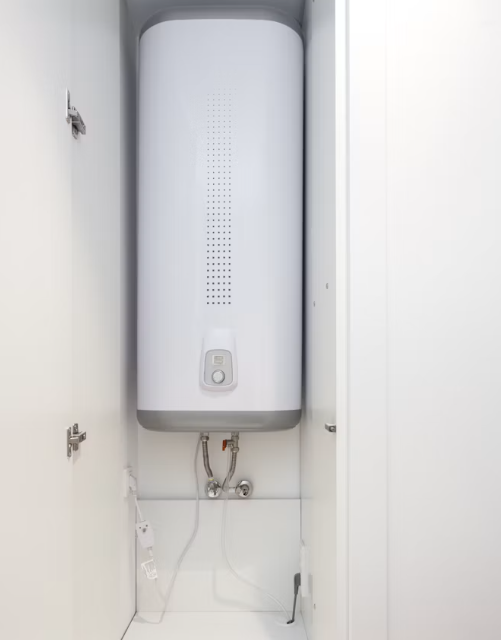
Water heater replacement Rockford IL
Rockford Water Heaters helps homeowners with water heater replacement Rockford can rely on. Whether your tank is leaking, your water runs cold, or your unit is past ten years old, we handle water heater replacement, installation and repair across Rockford, IL and Winnebago County.
- Water heater replacement
- Water heater installation
- Water heater repair
- Tankless water heaters
- Gas water heaters
- Electric water heaters
Get Your Free Water Heater Quote
Tell us about your water heater needs and we will send you a quote with no obligation.
Water Heater Replacement Rockford: Timelines, Signals and Budgets
In Winnebago County the replacement decision is usually forced by hard-water scaling, a winter recovery shortfall, or a seam that finally lets go. Here is how homeowners here work through it.
Signals that the tank is finished, not fixable
With 15 to 25 grains per gallon in the local supply, a glass-lined storage tank in Rockford typically gives 8 to 11 heating seasons rather than the 12 printed in the brochure. These are the readings that end the repair conversation:
- Serial-date arithmetic. The first four digits of the rating-plate serial usually decode to week and year of manufacture; anything built before roughly 2016 is running on borrowed calendar.
- Repeat parts spend. Two gas control valves or two element-and-thermostat sets inside 24 months on the same tank rarely returns the money.
- Weeping at the shell. Moisture at a union, nipple or T&P outlet is serviceable; a wet ring under the jacket means the liner has cracked and the steel is porous.
- Anode exhausted. A magnesium rod chewed down to bare core wire in hard water leaves the tank walls taking the corrosion instead.
- Recovery shortfall in January. A unit that satisfied the house in August but leaves the third shower cold in deep winter is undersized for a 40°F inlet, not broken.
- Combustion problems. Repeated flame rollout, sooting or a pilot that will not hold on an atmospheric unit points at a blocked flueway or a fatigued burner assembly.
Matching the replacement to a Rockford house
Storage or on-demand. A storage tank reuses the existing flue, gas drop and water connections, so it is the fastest and least disruptive path. A tankless unit removes standby loss and the volume ceiling, but expects stainless or PVC category venting, a condensate route to a floor drain and often a re-sized gas branch.
Fuel. Where a gas water heater and a serviceable chimney liner already exist, staying with gas keeps operating cost lowest. Electric makes sense in closets, additions and finished basements with no venting path, and a hybrid heat-pump model pays back well in an unfinished Rockford basement with the headroom and the air volume it needs.
Capacity. Size against first-hour rating and winter temperature rise, not occupancy. A 60°F rise in July becomes an 80°F rise in January here, which is why a tankless unit rated at 7 gallons per minute on a spec sheet delivers closer to 4.5 in Rockford's coldest weeks.
Sequence of a replacement day
Isolate fuel and water, drain to a floor drain or condensate pump, break the unions and remove the old tank; set the new heater level on pan or blocks, remake dielectric connections, fit a new T&P valve with full-size discharge to within six inches of the floor, add or verify the thermal expansion tank against measured static pressure, reconnect vent with correct rise and clearance, purge air, fire and check draft with a manometer or smoke, then set the thermostat near 120°F and label the shutoff. Permit, inspection and haul-away close the job. Overview: water heater replacement in Rockford.
Water Heater Services in Rockford, IL
From a straight tank swap to an emergency leak, here's everything homeowners in the Rockford area can request help with.
Water Heater Installation
New and replacement installs for tank, tankless, gas and electric systems.
Water Heater Repair
No hot water, noises, pilot light and thermostat problems diagnosed and fixed.
Tankless Water Heater
On-demand hot water, sizing guidance, installation and descaling service.
Gas Water Heater
Natural gas units, venting, gas line and combustion-air considerations.
Electric Water Heater
Standard electric and heat pump units, elements, breakers and wiring.
Tank Water Heater
Conventional storage tanks in 40, 50, 65 and 75+ gallon capacities.
Emergency Water Heater Service
Active leaks, flooding tanks and sudden total loss of hot water.
Water Heater Maintenance
Annual flush, anode check, valve testing and combustion inspection.
Water Heater Leak Repair
Find the source of the leak and decide between repair and replacement.
Water Heater Flush
Clear sediment that hard Rockford-area water leaves in the bottom of the tank.
Anode Rod Replacement
Swap the sacrificial rod before rust reaches the tank's steel shell.
Why Rockford Homeowners Replace Their Water Heaters
Rockford's water supply comes from deep wells and runs hard — commonly 15 to 25 grains per gallon. That mineral load settles into the bottom of a storage tank year after year, insulating the burner from the water, driving up gas use, and accelerating the corrosion that eventually opens the tank. It is the single biggest reason water heaters here reach the end of their service life closer to the eight-year mark than the twelve-year mark.
Winter compounds it. Incoming water in northern Illinois drops to roughly 40°F in January, so a heater that kept up comfortably in July can leave the last shower cold in February. Many replacement calls in Rockford are not failures at all — they are units that no longer have the recovery rate to serve the household during the coldest months.
Housing stock plays a part too. Pre-1940 homes near Signal Hill, Churchill's Grove and Broadway often have tight basement stairs, older masonry chimneys and undersized gas piping that shape which replacement fits. Postwar ranches on the east side commonly have closet or utility-room installs where a power-vent unit is the practical upgrade, while newer subdivisions toward Perryville and Cherry Valley are usually straightforward like-for-like swaps.
Projects
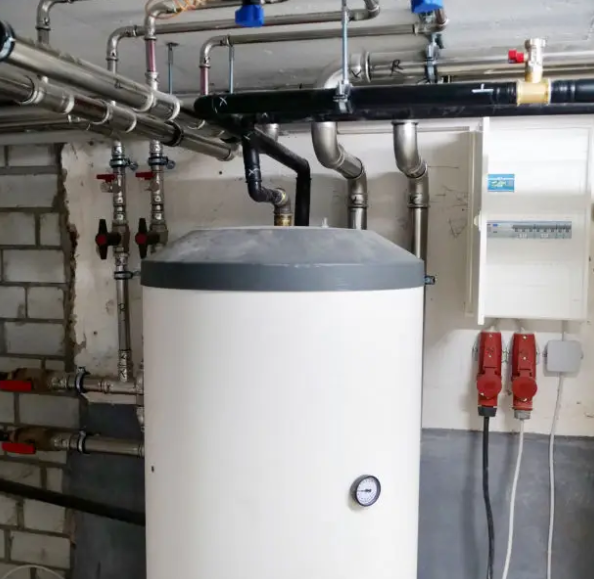
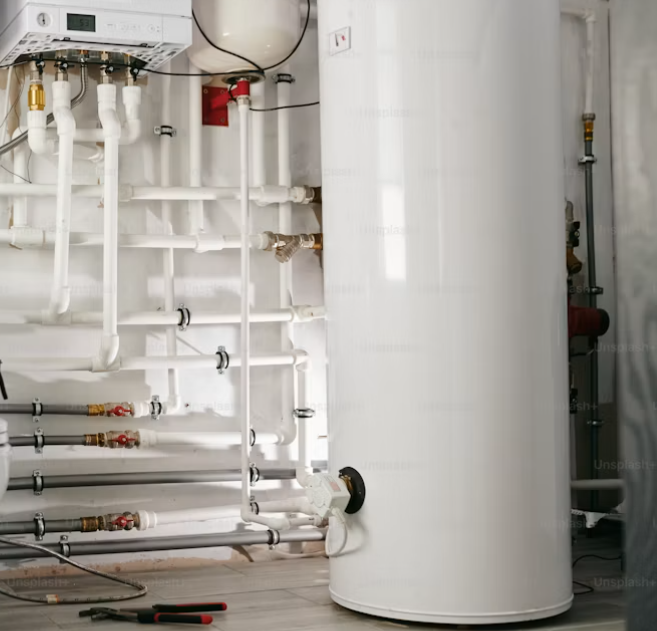
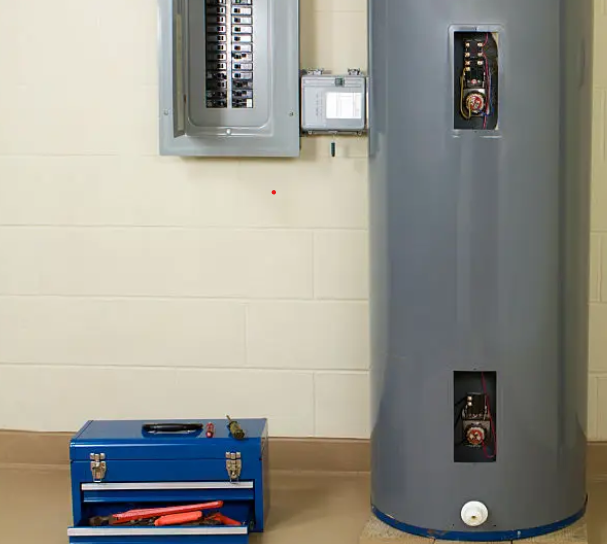
What a Rockford Water Heater Replacement Includes
A complete replacement is more than swapping a tank. Here's what a properly done job in the Rockford area covers:
- Sizing and selection — capacity and first-hour rating matched to your peak demand, or gallons per minute at winter temperature rise for tankless.
- Safe removal — gas or power off, water shut off, tank drained and the old unit carried out and hauled away.
- Code-compliant reconnection — new temperature and pressure relief valve with a proper discharge line, dielectric protection, and a sediment trap on gas units.
- Thermal expansion control — an expansion tank where the home is on a closed system with a backflow preventer or pressure-reducing valve.
- Venting and combustion air — draft verified on atmospheric units, correct PVC run on power-vent models, adequate makeup air in tight utility rooms.
- Startup and handover — lines purged, temperature set around 120°F, leak check, permit and inspection, and warranty registration.
Ask any quote you receive whether permit, haul-away, expansion tank, new shutoff valve and relief line are included — that's usually where two "same price" quotes differ.
Storage Tank or Tankless: How the Two Compare in Rockford
| Storage tank | On-demand tankless | |
|---|---|---|
| Hot water supply | Fixed reserve of 40 to 75 gallons, then recovery time | Unlimited duration, capped by gallons per minute |
| Winter performance | First-hour rating drops as the 40°F inlet pulls recovery down | Flow rate falls roughly a third at Rockford's January inlet |
| Energy behaviour | Burns fuel to hold temperature around the clock | Fires only on demand, no standby loss |
| Retrofit work | Reuses existing flue, gas drop and water connections | Category venting, condensate drain, often a larger gas branch |
| Hard-water upkeep | Yearly sediment flush plus anode inspection | Yearly descale of the heat exchanger, softener strongly advised |
| Typical fit | Like-for-like swaps in ranches and postwar basements | Homes short on hot water or short on floor space |
Compare in depth: tank water heaters and tankless water heaters.
Permits and Code Requirements in Rockford
Water heater replacement in Rockford is a permitted plumbing job. The City of Rockford Community & Economic Development department issues the permit and inspects the work; outside city limits, Winnebago County or the village where you live handles it. Pulling the permit is normally the installer's responsibility, and the fee is small compared to the cost of an uninspected install surfacing during a home sale.
- Temperature and pressure relief. A full-size discharge line must run downward to within about six inches of the floor, with no threads, valve or reducer on the end.
- Thermal expansion. Homes on Rockford Water Division supply with a check valve or pressure-reducing valve need an expansion tank so pressure has somewhere to go as the tank heats.
- Seismic and support. Not a northern Illinois concern, but strapping is still used where the unit sits on a platform or in an attic space.
- Gas venting and combustion air. Atmospheric-vent tanks in tight, remodeled basements often fail draft testing; that is when a power-vent or direct-vent unit becomes the right answer.
- Garage installations. Ignition sources typically need to sit 18 inches above the floor unless the unit is listed as flammable-vapor-ignition-resistant.
- Pan and drain. Any heater above finished space needs a drain pan piped to an approved location.
Ask any quote you receive whether the permit and inspection are included in the price. If a bid is unusually low, this is often the line item that is missing.
Rockford Water Conditions and What They Do to a Tank
Rockford draws its municipal water from deep sandstone wells, and it is hard water — commonly reported in the range of roughly 15 to 25 grains per gallon depending on which wellfield serves your neighborhood. Private wells in Winnebago County outside the city can run harder still, often with noticeable iron.
Hardness matters because every gallon heated leaves calcium and magnesium behind:
- Sediment on the tank floor insulates the burner from the water, so the burner runs longer, the steel runs hotter, and the tank fails earlier. The rumbling and popping you hear is water boiling under that crust.
- Anode rod consumption accelerates. In Rockford-area water, checking the rod at three to four years rather than waiting a decade is what separates a tank that reaches 12 years from one that fails at 8.
- Tankless scaling is the big one. A tankless heat exchanger in untreated Rockford water needs annual descaling; skipping it triggers error codes and voids most warranties.
Practical response: schedule an annual flush, plan on anode rod replacement mid-life, and if you already run a softener, keep it maintained — softened water is the single biggest life-extender for a water heater here. Install isolation valves on any tankless unit so descaling takes an hour instead of a plumbing project.
Climate and Hot Water Demand in Northern Illinois
Rockford winters shape water heater sizing more than most homeowners expect. Incoming main water drops to roughly 40°F in January against about 70°F in August. To deliver 120°F water, a heater has to add 80 degrees in winter versus 50 in summer — a 60 percent larger job in the coldest months.
- Tankless sizing must use winter numbers. A unit rated for 7 gallons per minute in mild conditions may only deliver 4 GPM at a Rockford February temperature rise. Size for the cold month or you will get lukewarm showers exactly when it matters.
- Tank recovery slows in winter. The same 50-gallon heater that kept up in July can run short in January because it refills with much colder water.
- Unheated basements and crawlspaces add standby loss. Insulating the first six feet of hot water pipe is inexpensive and noticeable.
- Heat pump water heaters pull heat from surrounding air, so they belong in a basement with enough volume and moderate temperature — not a cold, tight closet.
- Failures cluster in cold snaps. Late December through February is peak season for total loss of hot water, and it is also when emergency service is busiest. Replacing a 10-year-old tank in the fall is cheaper and far less disruptive.
Rockford Housing Stock and What It Means for Your Install
Much of Rockford's housing was built between the 1920s and the 1970s, and the era of your home usually predicts what an installer will run into.
- Pre-1940 homes in the Signal Hill, Churchill's Grove and Broadway areas often have narrow basement stairs, galvanized supply lines, undersized gas piping and shared masonry chimneys. Expect dielectric fittings, occasional repiping at the connections and, when the chimney liner is questionable, a move to a power-vent unit.
- Postwar 1950s and 60s ranches on the east side and in Loves Park usually take a like-for-like 40 or 50 gallon tank swap with minimal surprises — the simplest and cheapest replacements in the market.
- 1980s to 2000s subdivisions in Machesney Park, Roscoe and Cherry Valley tend to have utility-room or closet installs where clearance, door width and drain pan requirements drive the choice of unit.
- Newer construction in Rockton, Byron and Poplar Grove frequently already has direct-vent or tankless equipment, so replacement means matching venting and gas capacity rather than converting.
- Two-flats and rentals near downtown often run one heater for multiple units; sizing for simultaneous demand matters more than square footage.
Basement access is the most common cost surprise here. A 75-gallon tank that will not turn on an old stairwell landing sometimes becomes two 40s or a wall-hung tankless.
Brands, Suppliers and Local Pricing Context
Most Rockford installs use widely available brands — A. O. Smith, Rheem, Bradford White, State and Navien or Rinnai on the tankless side. Bradford White and State are contractor-supplied lines picked up at local plumbing wholesalers, while big-box stock leans toward A. O. Smith and Rheem. Parts availability in the Rockford market is good for all of them, which matters more than the badge: a heater whose gas valve can be sourced same-day in Rockford beats a bargain unit whose parts ship from out of state.
Typical ranges homeowners in the Rockford area see, installed and permitted:
| Replacement type | Typical installed range | What moves the price |
|---|---|---|
| 40–50 gal atmospheric gas tank | $1,500 – $2,600 | Venting condition, gas line, code upgrades |
| 40–50 gal electric tank | $1,400 – $2,400 | Circuit size, disposal, access |
| Power-vent gas tank | $2,200 – $3,600 | New PVC venting run, electrical outlet |
| 65–75 gal high-demand tank | $2,600 – $4,200 | Access, capacity, gas sizing |
| Whole-home tankless | $4,000 – $7,500 | Gas line upsizing, venting, condensate, isolation valves |
| Heat pump (hybrid) tank | $2,800 – $4,800 | Basement volume, condensate drain, rebate eligibility |
These are planning ranges, not quotes — actual pricing depends on your home. Ask whether the number includes permit, haul-away, expansion tank, new shutoff and relief line. Nicor Gas and ComEd efficiency programs periodically offer rebates on high-efficiency and heat pump units, and federal energy credits can apply to qualifying heat pump water heaters, so it is worth asking before you sign.
Areas We Serve
Requests are matched with local water heater professionals across Rockford, Winnebago County and nearby communities.
Inside Rockford that covers the near-west side and Signal Hill, Churchill's Grove and Broadway, the Midtown and Downtown/River District blocks, Edgewater and Guilford on the east side, North Main and Auburn, Rockford's Southeast side, and the newer subdivisions out toward Perryville and Cherry Valley. Outside the city we cover Loves Park, Machesney Park, Roscoe, Rockton, South Beloit, Belvidere, Poplar Grove, Winnebago, Byron and New Milford — anywhere within roughly a 30-minute drive of downtown Rockford, including the 61101–61114 and 61103/61107/61108/61109 ZIP codes.
Loves Park, IL
Water heater replacement, installation and repair help for Loves Park homeowners.
Machesney Park, IL
Water heater replacement, installation and repair help for Machesney Park homeowners.
Belvidere, IL
Water heater replacement, installation and repair help for Belvidere homeowners.
Cherry Valley, IL
Water heater replacement, installation and repair help for Cherry Valley homeowners.
Roscoe, IL
Water heater replacement, installation and repair help for Roscoe homeowners.
South Beloit, IL
Water heater replacement, installation and repair help for South Beloit homeowners.
Rockton, IL
Water heater replacement, installation and repair help for Rockton homeowners.
Byron, IL
Water heater replacement, installation and repair help for Byron homeowners.
Winnebago, IL
Water heater replacement, installation and repair help for Winnebago homeowners.
New Milford, IL
Water heater replacement, installation and repair help for New Milford homeowners.
Poplar Grove, IL
Water heater replacement, installation and repair help for Poplar Grove homeowners.
Common Water Heater Replacement Questions
How do I know it's time to replace my water heater instead of repairing it?
If the tank itself is leaking, the unit is past ten years old, or you've paid for two or more repairs recently, replacement is usually the better value. A younger unit with one failed part is worth repairing.
How much does water heater replacement cost in Rockford, IL?
Most Rockford homeowners see $1,400 to $2,600 installed for a standard 40 to 50 gallon tank, and $4,000 to $7,500 for a whole-home tankless conversion. Venting, gas line and code upgrades move the number most.
How long does a water heater replacement take?
A like-for-like tank swap normally takes two to four hours from shutdown to hot water. Switching fuel type, moving the unit, or converting to tankless usually takes most of a day.
What size replacement water heater do I need?
Peak demand matters more than household size. Two or three people are typically fine with 40 gallons, four to five with 50, and larger homes with simultaneous showers do better at 65 to 75 gallons or tankless.
Should I replace my tank with another tank or go tankless?
A tank is the simplest, lowest-cost replacement and reuses your existing connections. Tankless never runs out and frees floor space, but needs new venting and often a larger gas line.
Is a permit required to replace a water heater in Rockford?
Water heater replacements in the City of Rockford and Winnebago County generally require a plumbing permit and inspection. A reputable installer pulls it and handles the relief valve, expansion tank and venting requirements.
Do you haul away the old water heater?
Yes, removal and disposal of the old unit is part of a standard replacement. Confirm it is included in writing along with the permit, expansion tank and new shutoff valve.
Can I replace a water heater myself?
Gas, venting and pressure relief work carries real safety and code risk, and DIY installs often void the manufacturer warranty. For most Rockford homes a licensed installer is the safer choice.
Ready to Replace Your Water Heater?
Send a few details about your home and your current water heater. We will send you a quote with no obligation.
Get a Free Water Heater Quote