
Tank Water Heaters in Rockford, IL
Rockford Water Heaters helps Rockford, IL homeowners with water heater replacement, installation and repair. This page covers Tank Water Heaters in Rockford, IL. Every recommendation here is grounded in the details that decide the job: hard-water scale at 15–25 grains per gallon, cathodic protection, dip tubes, thermostats and high-limit ECO switches.
The conventional storage tank is still the most installed water heater in the Rockford area, and for good reason: predictable performance, straightforward replacement, and the lowest upfront cost of any whole-home option.
Get Your Free Water Heater Quote
Tell us about your water heater needs and we will send you a quote with no obligation.
How Storage Water Heaters Work
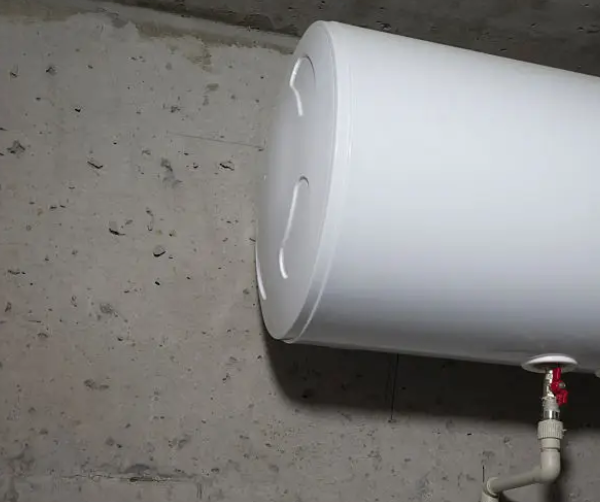
A tank water heater keeps a fixed volume — typically 40, 50, 65 or 75 gallons — heated and ready. Cold water enters through a dip tube near the bottom, gets heated by a gas burner underneath or by electric elements inside, and hot water is drawn from the top. The thermostat cycles the heat source to hold the setpoint.
The two numbers that matter are capacity (how much is stored) and first-hour rating (how much hot water the unit can actually deliver in a busy hour, combining storage with recovery speed).
Choosing a Capacity
| Typical household | Common gas capacity | Common electric capacity |
|---|---|---|
| 1–2 people, 1 bath | 30–40 gallons | 40–50 gallons |
| 3–4 people, 2 baths | 40–50 gallons | 50–65 gallons |
| 5+ people, 3+ baths | 50–75 gallons | 66–80 gallons |
These are starting points, not prescriptions. A large soaking tub, a high-flow shower system or two people showering simultaneously each push the requirement up. Electric models typically need more storage than gas because they recover more slowly. Compare fuel types at gas water heaters and electric water heaters.
Strengths and Limits of a Tank System
Where tanks win
- Lowest upfront cost for whole-home hot water
- Simple like-for-like replacement using existing connections
- Standing-pilot gas models keep working during a power outage
- Straightforward, widely available parts and service
Where tanks fall short
- Finite supply — heavy back-to-back use empties the tank
- Standby heat loss while it holds temperature
- Floor space, plus the risk that a failed tank releases its full volume
- Sediment accumulation in mineral-rich water
If running out of hot water is your main complaint, compare with tankless water heaters.
Getting the Most Life From a Storage Tank
Two maintenance habits matter more than everything else combined: an annual flush to clear sediment, and periodic inspection of the anode rod, which corrodes so the tank doesn't. Add an annual relief valve test and a look at the connections for early corrosion and you've covered the common failure paths. See water heater maintenance.
When the tank does reach the end, water heater replacement covers the decision, and installation covers the work.
How a Storage Tank Is Built
Understanding the construction explains most of what goes wrong. Inside the steel jacket is a welded steel tank lined with vitreous glass — a fired porcelain enamel that isolates water from steel. The lining is never perfect, so a sacrificial anode rod corrodes preferentially and protects the exposed seams and weld lines.
- Dip tube — delivers cold water to the bottom so it does not mix with the hot layer at the top.
- Insulation — foam between tank and jacket, measured as standby loss in the unit's energy rating.
- Drain valve — plastic on economy models, brass on better ones; the part most likely to fail to reseal after a flush.
- T&P relief valve — opens at 210 °F or 150 psi, the tank's only protection against overpressure.
- Nipples and unions — dielectric or plastic-lined where copper meets steel, to slow galvanic corrosion.
Warranty tiers mostly reflect anode mass, insulation depth and drain valve material rather than a fundamentally different tank.
First-Hour Rating and Stratification
Gallon capacity describes storage; first-hour rating describes what the unit can actually deliver in the busiest hour, combining stored hot water with recovery during that hour. A 40-gallon gas tank with a strong burner can outperform a 50-gallon electric tank in a morning rush.
| Household pattern | Typical target |
|---|---|
| 1–2 people, staggered showers | 40 gallons / 50–60 FHR |
| 3–4 people, one bathroom peak | 50 gallons / 65–75 FHR |
| 4–5 people, simultaneous showers | 65–75 gallons or high-recovery gas |
| Large soaking tub | Size to tub volume plus mixing, not headcount |
Tanks stratify: the hottest water sits at the top and is drawn off first. Sediment on the floor and a deteriorated dip tube both disrupt that layering, which is why a tank can seem to shrink years before it leaks.
Frequently Asked Questions
How long does a tank water heater last?
Typically 8 to 12 years for gas and 10 to 15 for electric, with water quality and maintenance driving the difference between the low and high ends.
Is a bigger tank always better?
No. An oversized tank costs more to buy and loses more standby heat. Size to your peak-hour demand rather than buying the largest unit that fits.
What is a first-hour rating?
It's how many gallons of hot water the unit can deliver during a busy hour, starting from a fully heated tank. It combines storage volume with recovery rate and is a better comparison metric than gallons alone.
Should I put a pan under my tank water heater?
If a leak could reach finished space, yes — a pan with a piped drain turns a potential flood into a manageable nuisance.
Can I switch from a 40 to a 50 gallon tank?
Often yes, provided the space, height clearance and connections allow it. Physical fit and vent clearance are the usual limiting factors.
Does sediment really shorten tank life?
It does. Sediment insulates the tank bottom from the burner, forces longer heating cycles and creates hot spots that stress the steel and its lining.
Request Help With Your Water Heater
Send a few details about your home and your current water heater. We will send you a quote with no obligation.
Not sure which service you need? Choose Not Sure in the form and describe what's happening, most homeowners are diagnosing the problem for the first time.
Get Your Free Water Heater Quote
Tell us about your water heater needs and we will send you a quote with no obligation.