
Gas Water Heaters in Rockford, IL
Rockford Water Heaters helps Rockford, IL homeowners with water heater replacement, installation and repair. This page covers Gas Water Heaters in Rockford, IL. Every recommendation here is grounded in the details that decide the job: hard-water scale at 15–25 grains per gallon, cathodic protection, dip tubes, thermostats and high-limit ECO switches.
Natural gas water heaters heat quickly and recover fast, which is why they're the default in a large share of Rockford-area homes. They also involve combustion, venting and gas supply — the parts of the system where correct work matters most.
Get Your Free Water Heater Quote
Tell us about your water heater needs and we will send you a quote with no obligation.
Atmospheric, Power Vent and Condensing Gas Units
Atmospheric vent
The traditional design: hot combustion gases rise naturally through a draft hood and up the flue. Simple and reliable, but it needs a suitable chimney or B-vent and enough combustion air in the room.
Power vent
A blower pushes exhaust out through PVC, often through a sidewall. That freedom is valuable in basements where the chimney is already serving a furnace, or where the heater sits far from an existing flue. Power vent units need an electrical outlet nearby.
Condensing / high efficiency
These extract additional heat from the exhaust, which means cooler flue gases, PVC venting and a condensate drain. Higher upfront cost, lower fuel use — often paired with larger households.
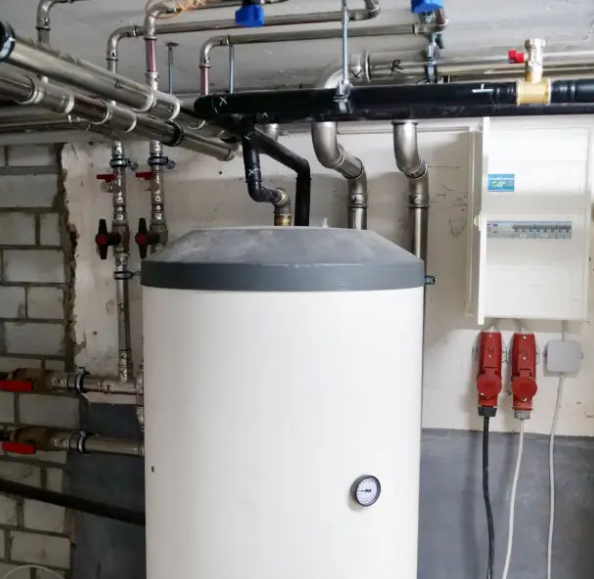
Venting, Combustion Air and Safety
Venting is the safety heart of a gas water heater. Problems to watch for:
- Backdrafting — soot near the draft hood, condensation on the tank top, or a burnt smell when the unit fires.
- Orphaned water heaters — when a high-efficiency furnace is installed and stops sharing the chimney, the remaining water heater can be left venting into an oversized flue that never warms up. This is a common finding in updated Rockford-area homes and often calls for a liner or a power vent unit.
- Tight utility rooms — sealing and insulating a basement can starve an atmospheric unit of combustion air.
Every home with gas appliances should have working carbon monoxide alarms. If you smell gas, leave and call your gas utility from outside before calling anyone else.
Common Gas Water Heater Problems
- Pilot won't stay lit — thermocouple, dirty pilot assembly, or restricted air intake screen.
- Burner short-cycling or yellow flame — combustion or venting issue that needs prompt attention.
- Slow recovery — sediment insulating the tank bottom from the burner, addressed with a flush.
- Gas control valve failure — common on older units and usually the point where replacement enters the conversation.
- Rotten-egg odor in the hot water — often a reaction between the anode rod and bacteria in the water; see anode rod replacement.
For symptom-by-symptom detail, see water heater repair.
Replacing or Installing a Gas Water Heater
Staying with gas is usually the least disruptive replacement path when gas service, venting and drainage are already in place. The install includes a sediment trap, a proper shutoff, leak-tested joints, a new relief valve and discharge line, and a draft test once the unit fires.
Comparing options? Look at electric water heaters, tank water heaters and tankless water heaters, or start with water heater replacement.
Atmospheric, Power-Vent and Direct-Vent Compared
| Atmospheric | Power-vent | Direct-vent | |
|---|---|---|---|
| Draft | Natural, through a chimney or B-vent | Blower pushes exhaust through PVC | Sealed combustion, two-pipe |
| Combustion air | Room air | Room air | Outdoor air |
| Best where | An adequate flue already exists | No usable chimney; sidewall run available | Tight closets and finished spaces |
| Needs power | No | Yes, a dedicated receptacle | Usually |
Backdrafting is the risk worth understanding on atmospheric units. Bath fans, a range hood and a dryer can depressurize a tight basement enough to pull flue gases back into the room. A draft test at the hood with the house in worst-case exhaust mode is part of a careful install or service visit.
Combustion Safety, FVIR and Carbon Monoxide
Every gas water heater sold today uses an FVIR burner chamber: a sealed combustion compartment with a flame-arrestor screen at the base that stops ignition of gasoline vapours drifting across a garage or basement floor. That screen also lints over. A unit that lights, runs briefly, then shuts down on the thermal switch is very often telling you the arrestor screen needs cleaning, not that the gas valve has failed.
Other safety points specific to combustion units:
- A sediment (drip) leg on the gas connection catches debris before it reaches the control valve.
- Flexible connectors must be listed for the appliance and never run through a wall.
- A CO alarm belongs on every level with a fuel-burning appliance; yellow, lazy flames or soot around the draft hood warrant shutting the unit down.
- Common venting with a furnace requires the combined vent to be sized correctly — a mismatch after a high-efficiency furnace swap leaves the water heater orphaned on an oversized flue.
Frequently Asked Questions
How long does a gas water heater last?
Commonly 8 to 12 years for a storage model, with water quality and maintenance making a significant difference at the margins.
Can I relight the pilot myself?
Many units include lighting instructions on the label and it's reasonable to try once. If it won't stay lit, stop and have it diagnosed rather than repeating the attempt.
What is an orphaned water heater?
When a shared chimney loses the furnace to a high-efficiency replacement, the water heater is left venting alone into a flue that's too large. It can lead to poor draft and condensation, and usually needs a liner or a power vent unit.
Is a power vent worth the extra cost?
It's worth it when your venting situation calls for it — no usable chimney, a long vent run, or a preferred location away from the flue. It also needs a nearby electrical outlet.
Why does my hot water smell like sulfur?
It's typically a reaction involving the sacrificial anode rod and naturally occurring bacteria. Changing the anode type often resolves it.
Do gas water heaters work during a power outage?
Standing-pilot atmospheric models generally continue to make hot water. Power vent and electronic-ignition models will not run without electricity.
Request Help With Your Water Heater
Send a few details about your home and your current water heater. We will send you a quote with no obligation.
Not sure which service you need? Choose Not Sure in the form and describe what's happening, most homeowners are diagnosing the problem for the first time.
Get Your Free Water Heater Quote
Tell us about your water heater needs and we will send you a quote with no obligation.