
Gas vs. Electric Water Heaters: Which Is Better for Rockford, IL Homes?
Rockford Water Heaters helps Rockford, IL homeowners with water heater replacement, installation and repair. This page covers Gas vs. Electric Water Heaters: Which Is Better for Rockford, IL Homes?. Every recommendation here is grounded in the details that decide the job: recovery rate, standby loss, energy factor (UEF), combustion air volume and vent termination clearances.
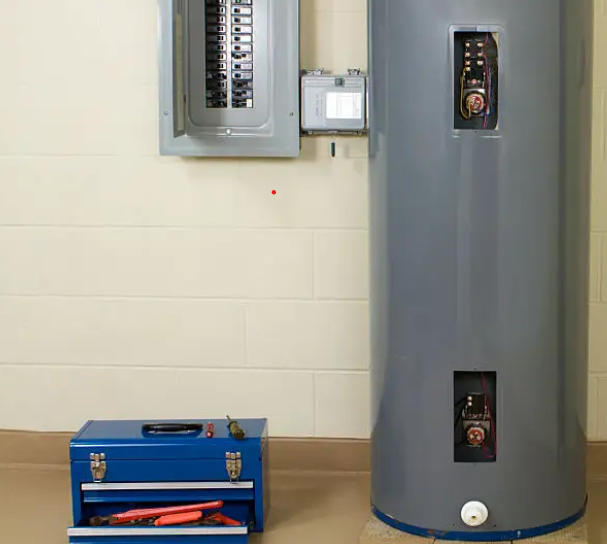
For most Rockford homes the honest answer is: stay with the fuel you already have, unless a specific problem pushes you the other way. Here's how to tell which case you're in.
Side by side
| Gas | Electric | |
|---|---|---|
| Operating cost | Usually lower with Nicor natural gas service | Higher for standard elements; heat pump models are the cheapest to run |
| Recovery rate | Fast — better for back-to-back showers | Slower on standard elements |
| Installation | Needs venting, combustion air, gas line and sediment trap | Needs a correctly sized dedicated circuit; no flue |
| Placement | Restricted by venting path | Flexible — closets, interior rooms, upper floors |
| Winter performance | Handles 40°F inlet water more easily | Standard elements struggle to recover during peak use |
| Power outage | Atmospheric models often keep working; power-vent does not | No hot water production |
When gas is the better choice in Rockford
If the home already has natural gas service and a usable vent, gas is normally the straightforward, lower-operating-cost replacement. It also matters more here than in warmer climates: incoming water around 40°F in January means a lot of temperature rise, and gas recovery keeps up with morning demand in a way a standard electric tank often cannot. Larger households and homes with two full baths in use at the same time are the clearest gas cases.
When electric makes more sense
Electric wins when there is no gas service, when the chimney or vent path is in poor condition and would need expensive correction, or when the heater has to go somewhere a flue can't reasonably reach — an interior closet, a utility room on an upper floor, an addition. Installation is simpler and the equipment is usually cheaper.
Don't skip heat pump (hybrid) electric
A heat pump water heater moves heat instead of generating it and typically uses roughly a third of the electricity of a standard electric tank. In a Rockford basement with enough air volume, a floor drain for condensate and space around the unit, it is often the lowest lifetime-cost option — and it may qualify for ComEd and federal incentives. The tradeoffs: higher upfront cost, some fan noise, and it cools the space it sits in, which is a plus in summer and a minor negative in winter.
Should you switch fuels?
Switching gas to electric or the reverse adds cost — new circuit and panel capacity one way, gas line and venting the other — so it rarely pays for its own sake. It does pay when the existing venting is unsafe, when you are finishing a basement and want the floor space back, or when you are moving the heater. Compare details on gas water heaters and electric water heaters, or request a free quote and describe your setup.
Sizing matters more than fuel
Fuel choice gets the attention, but the wrong size disappoints people faster than the wrong fuel. Use first-hour rating rather than gallons: a 40-gallon gas unit with a strong burner can deliver more hot water in the first hour than a 50-gallon electric with two standard elements. As a rough Rockford guide, one to two people are usually fine with a 40-gallon gas or 50-gallon electric; three to four people want 50-gallon gas or 66 to 80-gallon electric; five or more, or two simultaneous showers plus a soaking tub, points to 75-gallon gas, a high-recovery unit, or tankless.
Add capacity if you have a large tub, a high-flow shower head, or a laundry routine that overlaps with morning showers. Winter matters here too: with 40°F inlet water, the same heater delivers noticeably less usable hot water than it does in August, so size for January rather than for the day you are shopping.
Venting and electrical realities in Rockford homes
Older homes near the historic districts often share a masonry chimney between the furnace and the water heater. When a high-efficiency furnace is installed, the water heater can end up alone in an oversized flue that no longer drafts properly — a real safety issue and a common reason a gas replacement becomes a power-vent job. On the electric side, a 50-gallon standard tank typically needs a dedicated 30-amp, 240-volt circuit; homes still on 100-amp service with electric range and dryer may not have comfortable capacity for a fuel switch without a panel evaluation.
Ten-year cost comparison
| Option | Typical install | Annual energy | 10-year total |
|---|---|---|---|
| Gas atmospheric tank | $1,500 – $2,600 | ~$300 | ~$4,500 – $5,600 |
| Electric standard tank | $1,400 – $2,400 | ~$500 | ~$6,400 – $7,400 |
| Heat pump hybrid | $2,800 – $4,800 | ~$180 | ~$4,600 – $6,600 before rebates |
Ranges are planning figures for the Rockford market and move with utility rates and household use.
Maintenance differs by fuel
Gas tanks want an annual flush, a yearly look at the burner and draft, and an anode check every three to four years. Electric tanks want the same flush plus element inspection; scale builds directly on elements in hard water and kills efficiency. Heat pump models add an air filter to clean and a condensate line to keep clear. Tankless of either fuel requires annual descaling in Rockford water, which is why isolation valves belong on every tankless install here.
How to decide in five minutes
- Gas service present, vent in good shape, three or more people: replace with gas.
- No gas service, or a vent path that would cost thousands to correct: electric.
- Unconditioned basement with room and a floor drain, and you plan to stay several years: price a heat pump unit and check rebates.
- Endless hot water is the priority and the gas line can be upsized: price tankless with descaling built into the plan.
Get a Free Water Heater Quote
Tell us what's happening with your water heater and we will send you a quote with no obligation.
← Back to all articles
Get Your Free Water Heater Quote
Tell us about your water heater needs and we will send you a quote with no obligation.