
How Long Do Water Heaters Last? When Should Rockford Homeowners Replace Them?
Rockford Water Heaters helps Rockford, IL homeowners with water heater replacement, installation and repair. This page covers How Long Do Water Heaters Last? When Should Rockford Homeowners Replace Them?. Every recommendation here is grounded in the details that decide the job: temperature rise at winter inlet temperatures, GPM flow rates, heat exchanger scaling, isolation valves and condensate neutralizers.
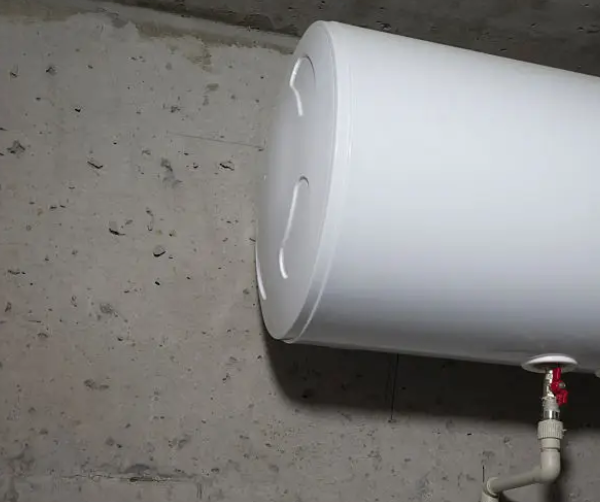
Manufacturers quote lifespans in ideal conditions. Rockford's deep-well water is not ideal conditions, and that difference is worth a few years.
Realistic lifespan by type
| Type | Typical lifespan | In Rockford's hard water |
|---|---|---|
| Gas storage tank | 8–12 years | Often 8–10 without annual flushing |
| Electric storage tank | 10–15 years | Often 10–12; elements scale early |
| Heat pump (hybrid) | 12–15 years | Similar, with filter and condensate upkeep |
| Tankless | 18–20+ years | Requires annual descaling to reach it |
How to find your water heater's age
Read the rating plate on the side of the tank. The serial number encodes the manufacture date — many brands lead with the year and week (for example, 2214 = the 14th week of 2022), while others use a letter for the month. If the label is unreadable, the model number and brand will let a supplier date it.
Why Rockford water shortens the number
City water here comes from deep wells and typically runs 15 to 25 grains per gallon. Those minerals drop out as the water heats and settle on the tank floor, where they insulate the steel from the burner and force it to run hotter and longer. That accelerates both energy use and metal fatigue. On tankless units the same minerals scale the heat exchanger, which is why descaling is not optional here.
What actually extends it
- Annual flush. The single highest-value maintenance item in this market — see water heater flushing.
- Anode rod checks every 3 to 4 years. The rod corrodes so the tank doesn't; replacing it is far cheaper than replacing the heater. More on anode rod replacement.
- Correct pressure. Above about 80 psi, install a pressure-reducing valve; add an expansion tank on closed systems.
- 120°F setting. Hot enough for safety and comfort, easier on the tank than 140°F.
- Right size for the household. An undersized unit runs constantly and wears out early.
When to stop repairing
Replace rather than repair when the tank body is leaking, when the unit is past ten years and needs a gas valve, control board or element, when repair costs approach half the price of a new install, or when you have called for service twice in two years. Also replace proactively before a long trip or before finishing the basement space around it — a failure over a dry floor is a bad day, a failure over new flooring is an insurance claim.
Planning ahead
If your heater is nine or ten years old and still working, that is the ideal time to price a replacement: you can compare options, size properly, and schedule it instead of taking whatever is on the truck at 9 p.m. Request a free replacement quote for your Rockford home.
What kills water heaters early here
Four things account for most premature failures in Winnebago County. Sediment is the first: minerals settle on the tank floor, insulate the steel from the burner, and cause local overheating that fatigues the metal and the glass lining. High pressure is the second: incoming pressure above roughly 80 psi, or thermal expansion in a closed system with no expansion tank, cycles the tank every heating period and finds the weakest weld. A depleted anode rod is the third — once the sacrificial rod is gone, the tank itself corrodes. Undersizing is the fourth: a heater that never gets to rest ages on a much faster clock.
Two more worth naming: a 140°F setpoint accelerates scale formation and corrosion compared with 120°F, and a missing or dented dip tube lets cold water mix at the top so the unit runs almost continuously.
A simple maintenance calendar
- Monthly: glance at the floor and the connections for moisture; make sure nothing flammable is stored near a gas unit.
- Every six months: exercise the relief valve briefly if you are comfortable doing so, and confirm the discharge pipe is unobstructed.
- Annually: full flush until the water runs clear; check the expansion tank charge; inspect the vent connector on gas units; clean the air filter on a heat pump model; descale tankless.
- Every three to four years: pull and inspect the anode rod; replace it if more than about half consumed.
- Every ten years: start budgeting for a replacement even if the unit is fine.
Warranty length is a lifespan clue
Six, nine and twelve-year tanks are often similar shells with different anode mass, insulation and component quality. In water at 15 to 25 grains per gallon, the extra anode material in a longer-warranty unit does real work, and the upcharge frequently buys more years than it costs. Keep the receipt and the model and serial numbers; warranty claims need them, and most manufacturers expect evidence of reasonable maintenance.
Repair-versus-replace math
A practical rule: multiply the age of the unit in years by roughly $100. If the repair estimate exceeds that number, replacement is usually the better use of the money. A $250 thermostat on a four-year-old tank is an easy repair. The same $250 on an eleven-year-old tank buys you an unknown number of months on a shell that is already past its expected service life.
Signs you have crossed the line
Leaking from the tank body, rusty hot water, a second failure within twelve months, a burner or control that no longer has parts available, or a unit past twelve years that has never been flushed. In each case the cost curve has turned, and a planned replacement with correct sizing, a fresh expansion tank and a permitted inspection is the outcome that lasts.
Get a Free Water Heater Quote
Tell us what's happening with your water heater and we will send you a quote with no obligation.
← Back to all articles
Get Your Free Water Heater Quote
Tell us about your water heater needs and we will send you a quote with no obligation.